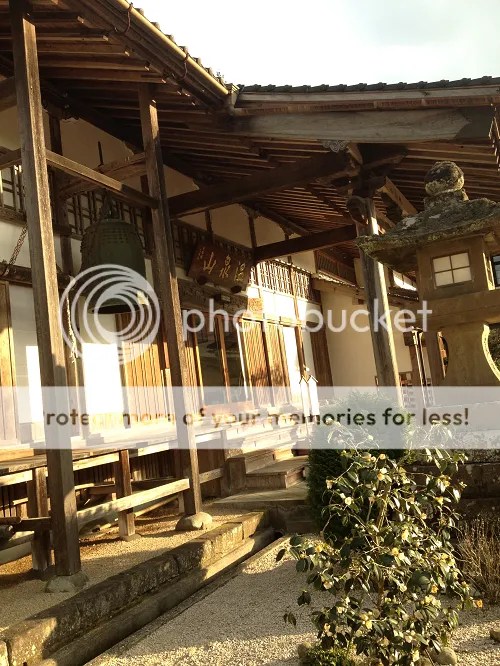
We’re probably all familiar with the rose–but how about its native Asian cousin, the camellia? While Camellia Sinensis is the plant that tea leaves comes from, C. Japonica comes in a wide variety of blossoms. It’s known here as 椿 (tsubaki), and it is one of the symbol flowers of Matsue. In Western flower language the camellia stands for an unpretending sort of excellence, and the Japanese Hanakotoba are more along the lines of modesty and loveliness beyond reproach (or in a white camellia’s case, a cool beauty). It also has connotations with love–an ideal love, or slightly different meanings by color. A red camellia may mean “I’m in love” or “I have a reserved kind of love,” whereas a white camellia might have more to do with waiting. Many camellia varieties may have buds for a few months before blooming–I’m willing to bet that’s where they got the “waiting” part!

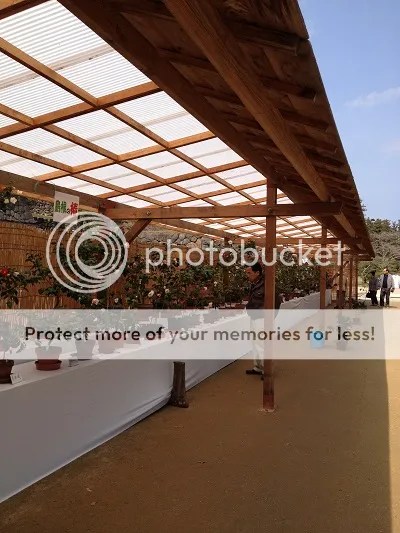
There was a variety of camellia that bloomed through most of the winter all through town (and which smelled very sweet!), but most of the more unique varities–or even the most basic red ones which first come to mind when someone pictures them–all burst into bloom around the same period of time earlier in March, and are still continuing to bloom now. The big pink ones right outside my office just opened up over the past few days! While I’m always excited to see what varieties are peaking over the fences around the neighborhood, one of the best places to see them is in the camellia forest on the western Matsue Castle grounds, home to about 450 camellia trees. The San’in Camellia Club just held their 44th camellia show on the castle grounds over this past weekend, too.

Now here’s a whole bunch of pictures I’ve been collecting over the past few weeks:


There are some other connotations associated with the camellia that I’ll bring up in my next entry about them.

The Matsue Castle Festival started this weekend and will go on through the beginning of April so as to catch the whole sakura season. There were some blooming already, but most of them are still buds. I was just happy that it was the first time I’ve gone out without a coat this year! The castle grounds were bustling with activity, as everyone was out enjoying the weather.

The plum garden is about done with its show for this year…

…but the cherry blossoms are making an early start.

And the samurai are fired up as usual. Watch where you point that thing!

While I was on my way elsewhere and taking an extended detour through the castle grounds, I had a lot more time than I thought I would, so I finally stopped at Herun-no-Komichi (Hearn‘s Little Street–it’s a road he liked to take on his way to work). This is a little shop on the way to the Inari shrine at the northwest entrance to the castle grounds. I had always been curious about it, and on this particular Sunday the universe–especially the weather!–aligned itself in such a way that I felt compelled to stop there for a few minutes.

Besides an array of dango (dumpling) and tea combos, grilled riceballs, and shijimi clam miso soup (a local specialty), you can also get a couple old Izumo favorites: zenzai, which is an azuki (sweet red bean) soup with mochi (pounded sticky rice), or bote-bote cha.

Speaking of Shijimi clams, here are a few! Most of the shijimi clams consumed in Japan come from Lake Shinji, but they aren’t typically this colorful.

Of course, the whole decor was perfectly timed with the seasons–more to come on these featured flowers later.

Not that I was there to see flowers–there were plenty to see outside around town already! Rather, I was summoned by the tantalizing sight of dango. Have you heard the phrase “hana yori dango“? It means “dumplings over flowers”–something practical is worth more than something pretty!

They had a few varities to choose from, including sakura dango coated in a salty miso sauce. Since I was having matcha with mine, I went with a tea flavored one coated in a sweet azuki paste instead. They’re all heated up and coated to order.

That one’s mine!

Flowers may fade fast, but I can’t say the dango lasted very long either. I don’t usually eat dango, but I was in such a mood for it than I got some more at a different shop at the opposite end of the castle as I was passing by again at the end of the day. Herun-no-Komichi’s style is to coat the dango, but other kinds of dango are made with fillings instead.

With all this talk about flowers, I might as well post some of the other pictures I took on Dango-Day. They aren’t necessarily flowers that people time their outings to go out and view when they’re in full bloom, but I enjoyed them all over town anyway. Finally! Spring is here! There will more flower-specific posts to come very soon, though.


The Japanese approach to religion is sometimes a little more worldly than eternity-focused. That’s not to say there isn’t a deeper side of religious practice, as there certainly is a depth and variety of it, but practices like leaving beer as an offering for Buddha are completely normal.

Alcohol is a somewhat universal offering, is it not?

The requests you can make of a Buddha–in this case, the very merciful Jizo-sama–can be surprisingly shallow in light of other religious practices, but nonetheless very popular. There is plenty of scholarly research about Japanese perceptions of beauty and beautiful people which I don’t need to go into here, but suffice to say that people–especially young women–can and do go on beauty tours. One of the places they come to is Tamatsukuri Onsen, on the southeast bank of Lake Shinji.

Our local hot springs--highly recommended!

Shimane is known as the best prefecture in Japan for beautiful skin, but the Tamatsukuri hot springs in particular are known as the Baths of the Gods. Besides mythological records of the Izumo region like the Kojiki and Nihonshoki, we also have the 8th century encyclopedia of the Izumo region, the Izumo-no-Kuni-no-Fudoki (one of the most complete anthropological and geographical records of Japan for that time period), in which these hot springs were described as a place where the young and old alike would party in the baths that kept their skin looking young and pretty. Today it’s not just the locals, but vacationers staying at the ryokan (fancy inns) or just strolling through the area who take advantage of these waters and beauty products made from them.

That’s why signs like this on the outskirts of the ryokan area are only slightly surprising.

“There are lots of BEAUTIFUL PEOPLE around this area, so keep your eyes peeled!”

While the historic shinto shrine, charming shops, foot baths along the Tamayu River and the luxury hotels are probably the things that first come to mind when people think of this area, I thought I’d introduce Seigan-ji, a temple built around the year 1500 and known for its Oshiroi Jizo. It is the 33rd of the 33 Izumo Kannon pilgrimage spots.

More general pictures of Seigan-ji are here (Japanese page), but they don’t have pictures of how to make a very specific request of the Oshiroi Jizo-sama. You start by buying a little prayer tablet, either for your face or your body, on which you write how you’d like to change your body image on one side, and indicate the area on the picture on the other side. You then hang this board next to the Oshiroi Jizo.


After doing so, you apply some white powder to the spot on the Oshiroi Jizo-sama that corresponds to the spot you’d like to change.

The story goes that a high priest did this and the ugly birthmark on his cheek disappeared. People not only do this to remove shallow imperfections, but also for to heal ailments and injuries.

I didn’t do it because I was too flustered with people I knew watching, but as soon as I walked away I suddenly though of everything I would have asked for! Oh well, can’t push my luck. I went home with a little bottle of Tamatsukuri beauty water anyway.

There’s something wrong with this picture–you don’t rinse your hands above the fountain, but in a lower basin next to it so as not to contaminate the water!


I got my bottle for free–and the little old lady taking some for herself was very enthusiastic about the water’s effects.

I consider myself relatively skilled at using chopsticks, but as the saying goes, サルも木から落ちる (even monkeys fall from trees).

I was told recently that because Susano-o’s discovery of the chopsticks floating in the Hii River was the first Japanese record of chopsticks, the Japanese use of chopsticks originated in the Izumo region. Hmmmmmm.

Continued from Part 3


Continued in Part 5

Happy St. Patrick’s Day!

Tokyo is having their parade this weekend, but Matsue’s Irish Festival–one of the biggest Irish celebrations in Japan outside of Tokyo–was held last weekend. Like any good parade, it looked like it was going to get rained on, but we managed to only start the day in Irish-style rainy weather, and by the time we marched the rain let up. Evidentally there were enough people with enough Irish blood to give us the luck we needed.

Besides the foreign community this event tends to bring out of the wood works and yours truly, we had some full-blooded Irish visitors from Tokyo–the Irish Ambassador and his wife. One of the other notable part-Irish people around here is Prof. Bon Koizumi, Lafcadio Hearn’s great-grandson. It is because of Lafcadio Hearn’s influence on Matsue that the city maintains a relationship with the city of Dublin.

Prof. Bon sporting a very green look! Ironically he’s standing directly in front of the relief of Lafcadio Hearn on the wall in the background.

While there are diplomatic sides to this event, it’s pretty much a big party and a good excuse to dress up.

What better day to wear shamrock-patterned green rainboots? Among other things.


Ebisu, one of Japan’s lucky and mirthful gods, whose lead shrine is in Mihonoseki, part of the Shimane Peninsula. He’s decked himself out in shamrocks for the occasion.


They had katana umbrellas! I always wanted one of those.


There were properly dressed bagpipe players! I just didn’t get any other pictures besides this one before the parade.


When I asked the father of this One Piece family if I could post this picture, the boy in front yelled, “Yeah, go ahead!” right away.


This high school band is looking pretty snazzy.


A Muppet? Gumby? Numemon? Well, it’s green, so it’s in the right place.


I was busy carrying a sign for the traditional Irish music group Prof. Bon and his wife Shoko-san run, so I didn’t take any pictures during the parade itself. You can check out more of that on our Irish CIR’s blog with Jinjer Templer’s photography. Being in the parade myself, however, I got to see things like a samurai and a ninja performing a jig while waiting to go down the street again.

Besides the parade on Sunday, there were vendors selling Irish-ish food and otherwise (green crepes must count for something, right?), there was a performance contest and a Ceili dancing session–complete with a promotion character that looks like ice cream dancing in costume. Click below for a 38 second clip of this, taken by St. Patrick himself.

Martin’s video of Matsue Ceili Dance 2013

One of the biggest draws on the weekend was the Shamrock, the Irish pub held on Saturday and Sunday with Guiness on tap and hot food and desserts following Irish recipes, complete with lots of Irish Whiskey. I was among the performers for four songs, but besides traditional ballads, there was quite a variety:

This isn’t the whole big jazz band–they also had a vocalist who did a pretty impressive Louie Armstrong impression.


Rakugo: Traditional Japanese Sit-Down Comedy


Besides playing musical instruments, he also works magic with balloons.


I’m sure this umbrella will keep me dry…

Speaking of Irish ties in Matsue, I discovered my first four leaf clover last August on my way to my welcome party.

Gyun is a wonderful little sound effect in the Japanese language for “when your heart drops” or you witness something “heart-wrenching”. At last, my first spring in Japan has come!

One of the first flowers to bring in the season is the 梅 (ume, plum blossom). They come in a variety of shapes and colors, from white with five petals to soft pink with pillowy layers of petals to deep mauve with however many petals it wants.


This tree wasn’t as patient of a bloomer as the others and already looked like this by March 2nd.

On the western lower citadel of Matsue Castle, there is a plum forest. Unlike the forests around it, this one wasn’t planted at the time of the samurai, but at some point within the past fifty years or so. At least that’s what I gather after listening to a story from Kimono-sensei–as a high school student, she played on tennis courts where the plum trees are now.

The trees there are mostly of the five-petal variety. At the beginning of March, most of the pink ones were still just buds, but the white ones were already in blooming stride.

A week later I took another walk around here to see how many of the pink ones had opened after we had a couple days of warm weather.

The darker pink ones were still being a little slow!

Indeed they were, and the little forest was fragrant! Both times I went there were old couples, single walkers, parents and children, bike-riders and dog-walkers taking their time to stroll through, but there were more this second time around dusk. When a couple of old ladies walked by, they told me to take a whiff of the blossoms, as this was a unique fragrance that you only get to enjoy at this time of year. I did as instructed (though I had already been sticking my nose in plenty of blossoms by that point) and commented about the scent, and the old ladies replied, “Oh, good! She understood us.” Indeed, life is a little easier when you can communicate with the people around you, but enjoying flowers is a universal language.

Speaking of languages, have you heard of the Language of Flowers? This was a big thing in England and other European countries in the Victorian era, and it’s also a relatively common thing out here in Japan, too. It was used then to express feelings that could not be stated in explicit words, such as “I am starting to have feelings for you” or “I am passionately in love with you” or “I hate you and will get my revenge”. Certain combinations of flowers carried complex messages, and even having a flower delivered upside down could express a very specific sentiment. However, the Japanese Hanakotoba sometimes have different connotations from their Western counterparts (though they probably retain more of the Western meanings than Western countries do!), and instead of mostly being used in conversational gift bouquets, they can represent ideas in many contexts.

While the basic connotation with plum blossoms is “oh, spring is on its way! Oh, and Hinamatsuri is on March 3rd,” it can also be associated with many forms of beauty–everything from a patient, elegant, noble sort of beauty to a more independant, intense, glamous beauty. My personal associations with plum blossoms, with rounded petals rather than nibbed petals like cherry blossoms, is that they’re cute. I also think of the plum trees in the back corner of my neighbor’s yard and that they let us take some of their plums once, Chinese paintings of plum blossoms, and all the sour ways plums get used in Japanese sake, candy, and lunch boxes.

What do you associate plum blossoms with?

I’ve mentioned before that I’m trying to get my addiction to dessert cafes under control. It’s difficult with so many of them all over town, but I’ve been doing pretty well, and that makes the times I do treat myself all the sweeter (that was only a semi-intentional pun). I had a number of things to do on this particular Sunday in early March, but the Matsue History Museum was on my way so I stopped in to Kiharu for a quick break.

The museum is located right around the samurai district and the castle, so the outside of the building was designed in an old Edo period style–seeing as it was built on the same ground as a high-ranking samurai’s house in the past. The inside, however, is very comfortable has a sleek design, mixing Japanese elements–such as tatami flooring–with western elements–such as nice bathroom features. While the exhibits do charge admission (though it’s cheap admission to begin with and foreign visitors get a half-price discount), it’s free to browse the temporary photo and art exhibits, look around the library and the gift shop, peak at the perserved tea house, or stop in to enjoy a beverage and sweets at Kiharu, the cafe facing the garden.

Given characteristics like the color choices and the raised stepping stones, this is a characteristic examples of Izumo style gardening.

There are plenty of ice cream, wagashi, coffee, and tea sets to choose from, and the wagashi here are all Kiharu originals.

Sakaiminato may have Kitaro-themed everything, but I didn’t notice wagashi there! I like the Nezumiotoko one best.

What are you doing there, Shimanekko? You’re not a youkai!

I had just gotten my fill of wagashi the day before (which means staying out of cafes isn’t my only issue!), so I went with a matcha cream soda–green tea, soda, and vanilla ice cream. It hit both my craving for matcha and for something sweet–but to prevent brain freezes or overwhelming my tastebuds, it came with regular sencha anyway. For those who aren’t familiar with the terms, matcha and sencha are both green tea, but matcha is powdered green tea that you consume, whereas sencha is made by steeping the leaves.

There’s still so many more cafes that make me curious and that I want to treat myself to, but I guess this will tie me over for a while.

On a different topic, tonight the Shimane Civic Center is having a free showing of Stu Levy’s documentary about the Tohoku region’s post-earthquake recovery, “Pray for Japan“. The San’in region out here in the west part of Honshu isn’t very earthquake prone, but that doesn’t mean we’ll go through this 2nd anniversary unaffected. There’s still a lot of rebuilding to be done, and we’re sending aid and good wishes from here.

There are ducks that hang out on Lake Shinji all year long, but there seem to be quite a few in winter. As you can see, it’s a major spot for migratory birds of many varieties–not to mention it has been designated as a wetland of international importance.

I like living so close to the lake–it’s very easy to just wander across the street after work to see the scenery for a few minutes. In nicer weather, we’ll often picnic at the lakeside for lunch–though a few of my friends have had parts of their lunch stolen by the kites (birds of prey, not toys). I wish I had been there to see that!

What do you call a flock of kites? A party? There were two more of them hanging out here, too.

There was a day a few weeks ago when the lake was covered with thousands of birds all at once. I had noticed it while passing by the lake for something for work, and I went by after work to see them again–sure enough, still there, in no hurry. My photos don’t do the scene justice, but it was pleasant to watch for a few minutes.


Since I was taking my time on the way home anyway, I stopped by the Ichibata railroad station at Matsue Shinji-ko Onsen. This hot spring at the northeast bank of Lake Shinji is rich in sulphates and chlorates, and there is a long line of fancy hotels, but for people pressed on time (or money) there is a free foot bath right outside the station.

There’s also a Jizo here to pour some hot water on so he can enjoy the hot springs, too!

When I go to Izumo, I usually take the Ichibata rail road line along the north shore of Lake Shinji, and there are other nice day trips along the way–like ice skating! The rink is located direcly at the northwest shore, next to a nature park, and short walk from a train stop. After a few hours of skating, we were surprised by the very pleasant February weather outside.

The watery fields were reflecting the blue sky, and in the distance we could see a huge crowd of swans.

Much closer, however, a bunch of kites were flying around with each other–and one crow invited himself to the party.

Then the two-car train came. Today it was a Mizuki Shigeru youkai themed train–why hello there, Betobeto-san!

Then we had a forty-minute view of the lake on the way back. This included the sunset, of course–as well as more ducks.

Then there are days when most of the ducks are on the Ohashi River instead of in the middle of the lake. It’s just another part of living in Matsue when a friend calls you up and says, “Hey, are you busy? No? Let’s go watch the sunset.”

Lake Shinji sunset
Which the duck sees every day
Plunk! It takes a dive


Lone as the sun sets
But the sun is alone too
Making quite a pair


Shinji’s depth shrouded
Colored by sunshine fleeting
To the land of clouds


Never parting on
Migration to Matsue
Quack quack quack quack quack

Continued from Part 2


Continued in Part 4!

Design a site like this with WordPress.com
Get started